
Is there anything more enjoyable than traveling? Now imagine spending a few hours as an explorer of new lands and cultures — but through the eyes of someone from Milan. That’s exactly the kind of experience you’ll have at Mudec (Museo delle Culture), located at Via Tortona 56, one of the city’s most vibrant and creative districts. Here you’ll find objects, stories, and even animals that reflect the journeys and traditions of people from the Americas, Africa, and Asia.
Table of Contents
Discovering Mudec – Museo delle Culture in Milan
From the outside, the building looks like a typical Milanese structure — if not for the many signs calling attention to the unique experiences waiting inside.
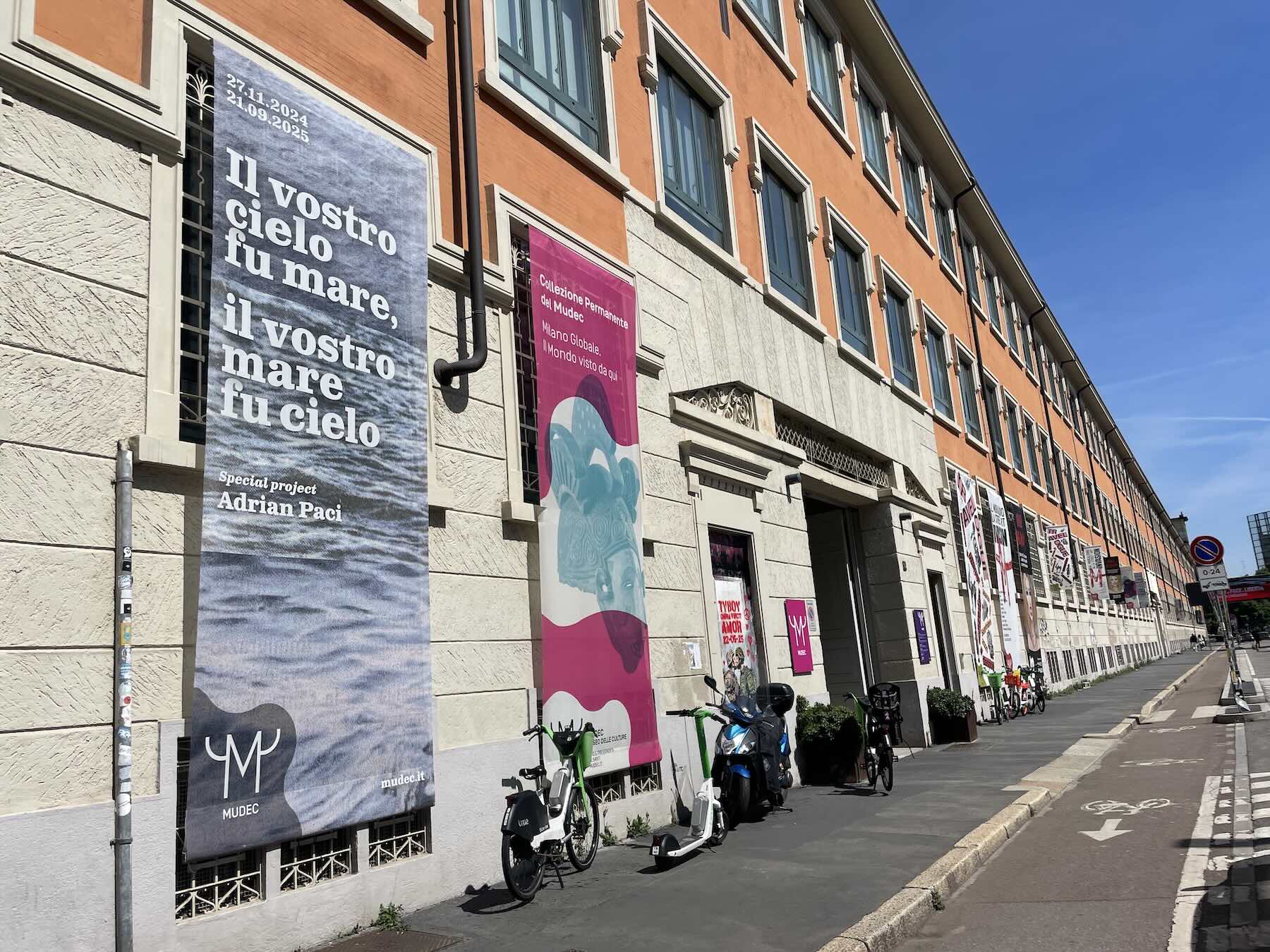
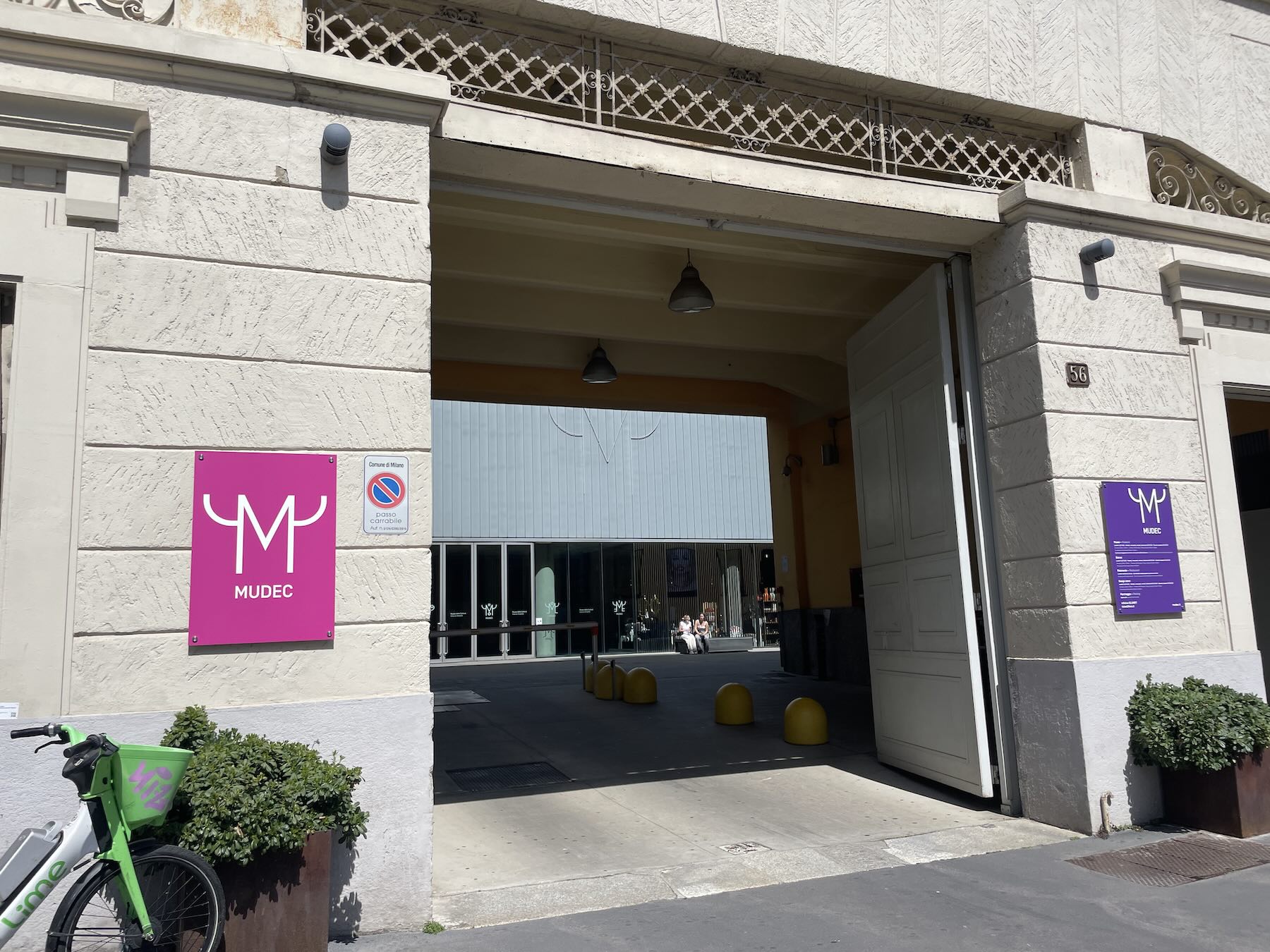
Once you step through the first entrance, large glass doors open into the museum’s bright lobby, where you’ll find the ticket counter and a small gift shop.
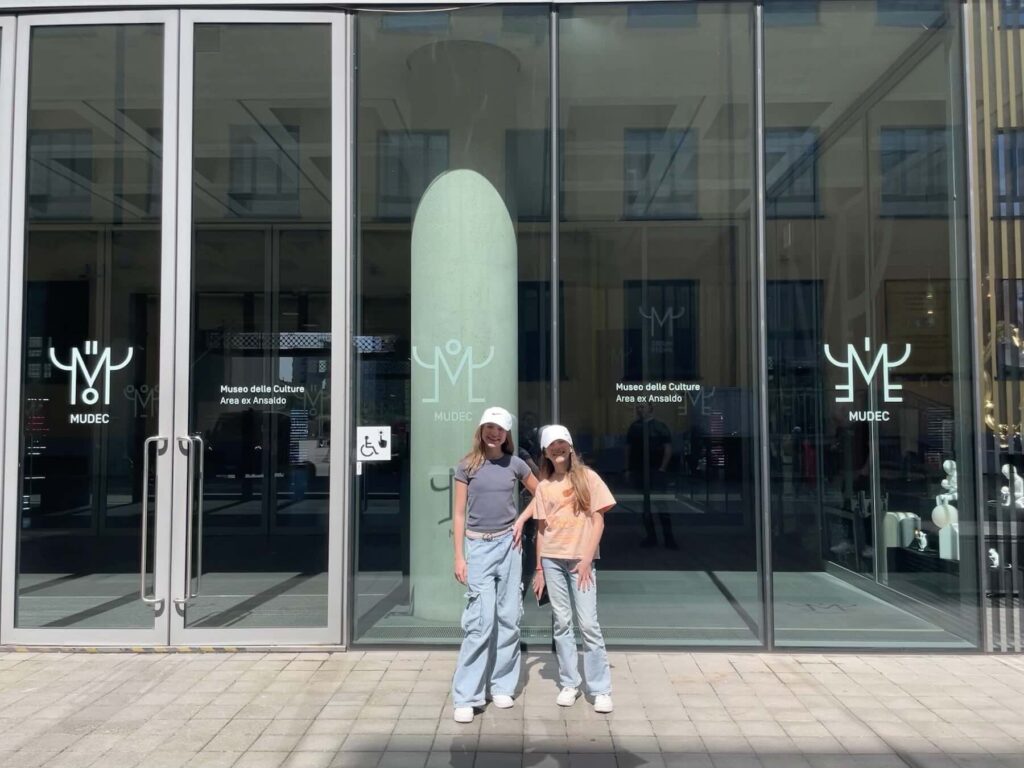
Although admission to the permanent collection and some exhibitions is free, tickets are still required. It’s good to know that depending on the time of year, there may be one or more temporary exhibitions that require paid entry.
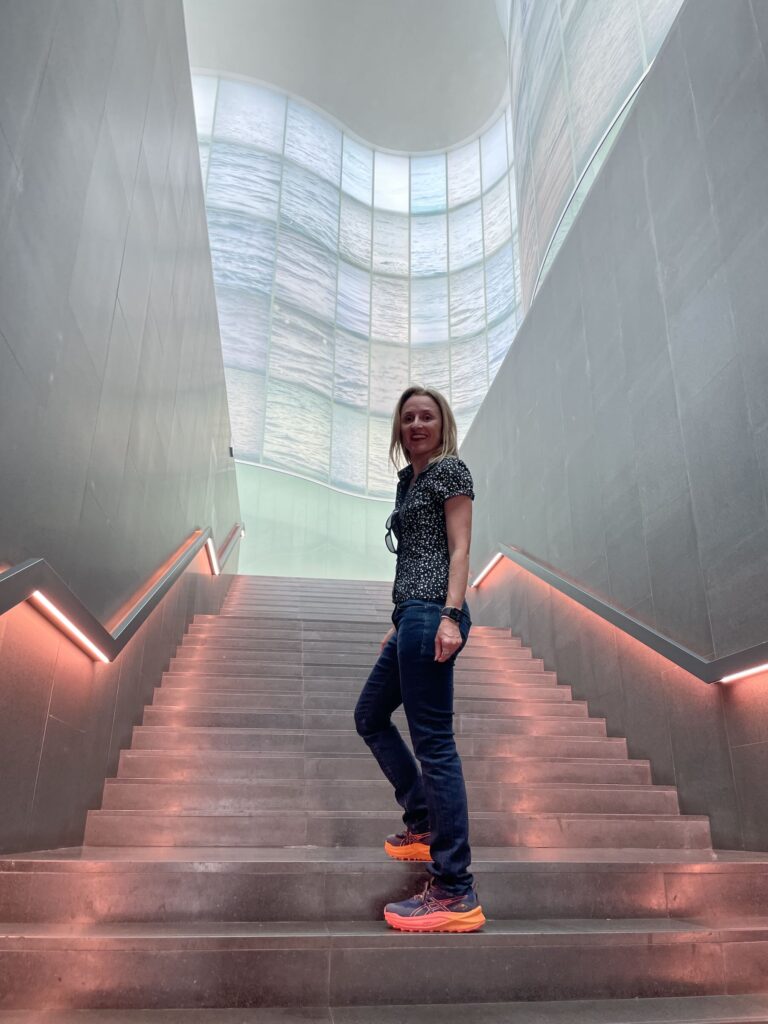
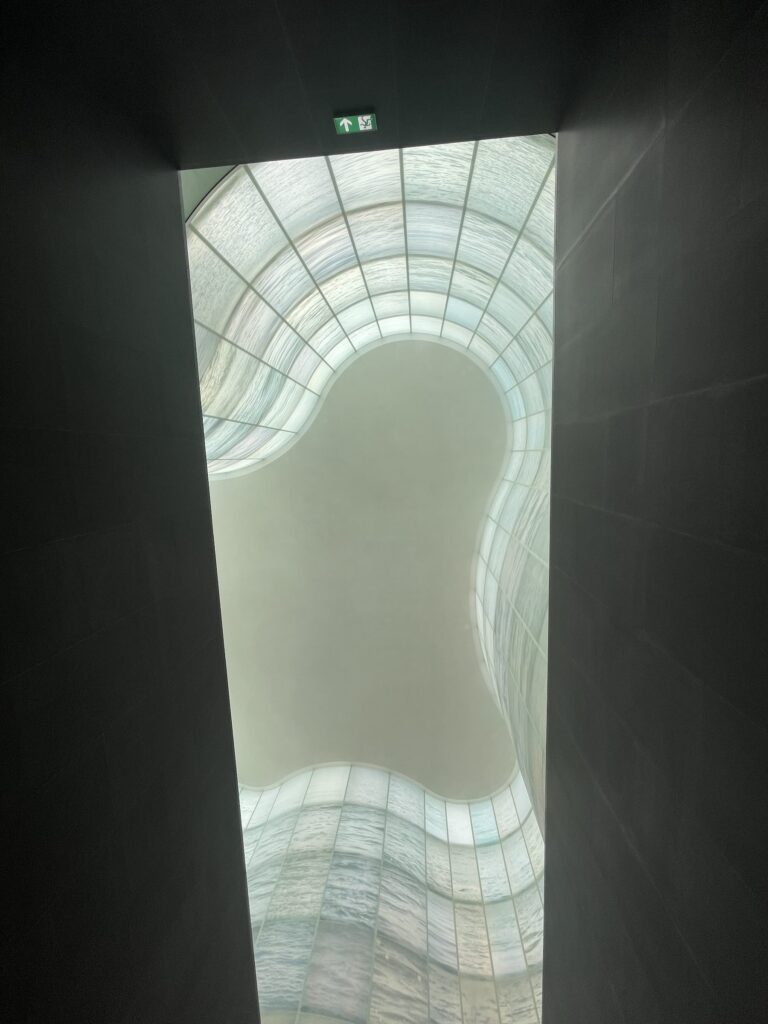
With tickets in hand, you’ll walk up the grand central staircase to the first floor. The architecture of the staircase and the entire space immediately gives the impression of stepping into another dimension — as if you’re about to set off across oceans in search of discovery and adventure.
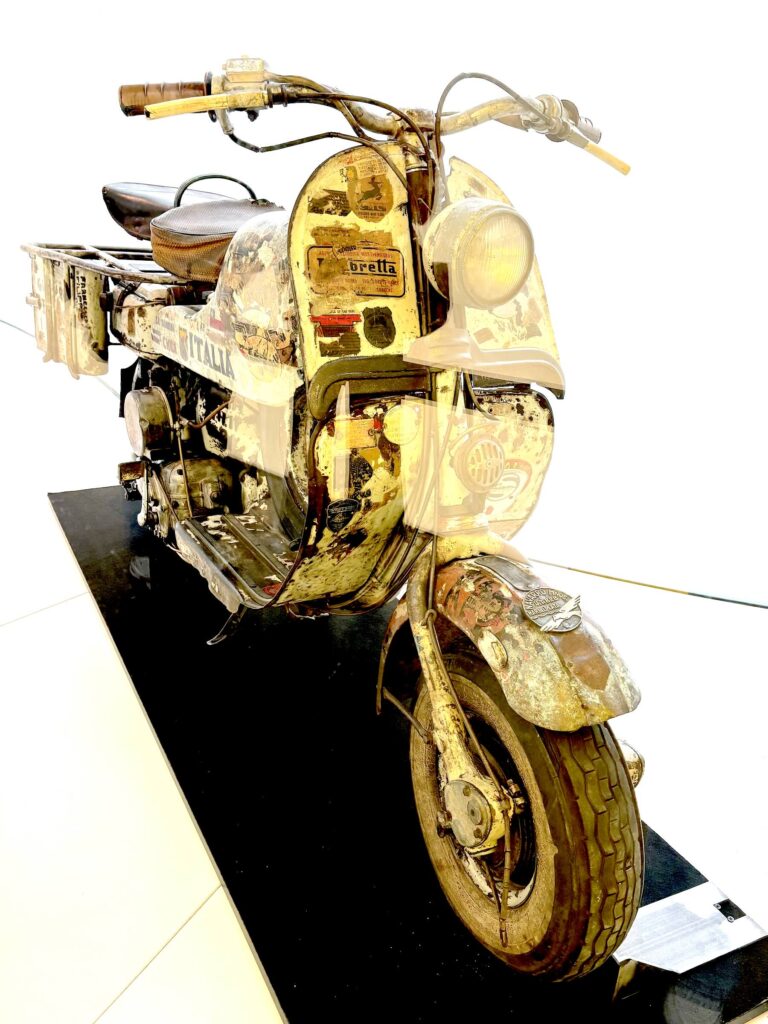
In the main upstairs hall, you’re greeted by a few remarkable travel artifacts — including a Lambretta scooter that traveled an astonishing 160,000 kilometers across Europe, Asia, and the Americas between 1956 and 1959. Manufactured in Milan’s Lambrate neighborhood by Innocenti, this scooter embodies the spirit of post-war exploration.
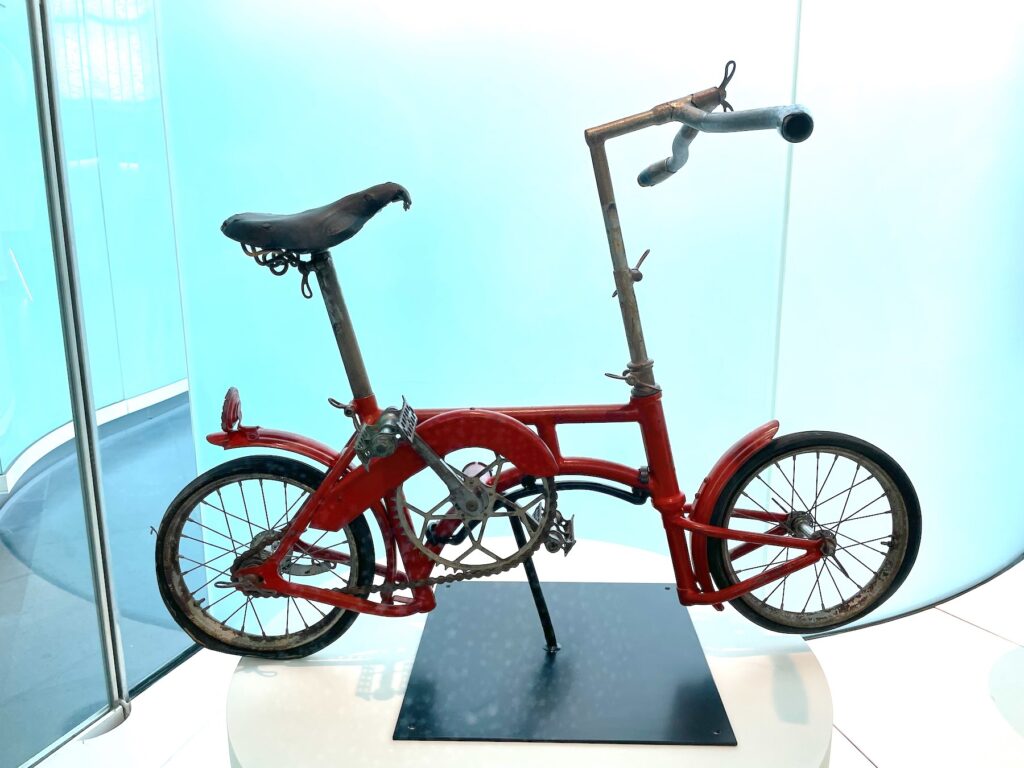
You’ll also see one of the first folding bicycles of the 20th century. Originally designed for military use, it could be packed into a small suitcase and later became popular for urban travel, allowing riders to easily hop on a train or ferry with their bike.
The Permanent Collection at Mudec
The journey through the permanent collection begins in the 16th century, when Milan became part of the powerful Spanish Empire. That moment marked the city’s entrance into the global stage, connecting it with the international trade networks of the time — including those with the Americas.
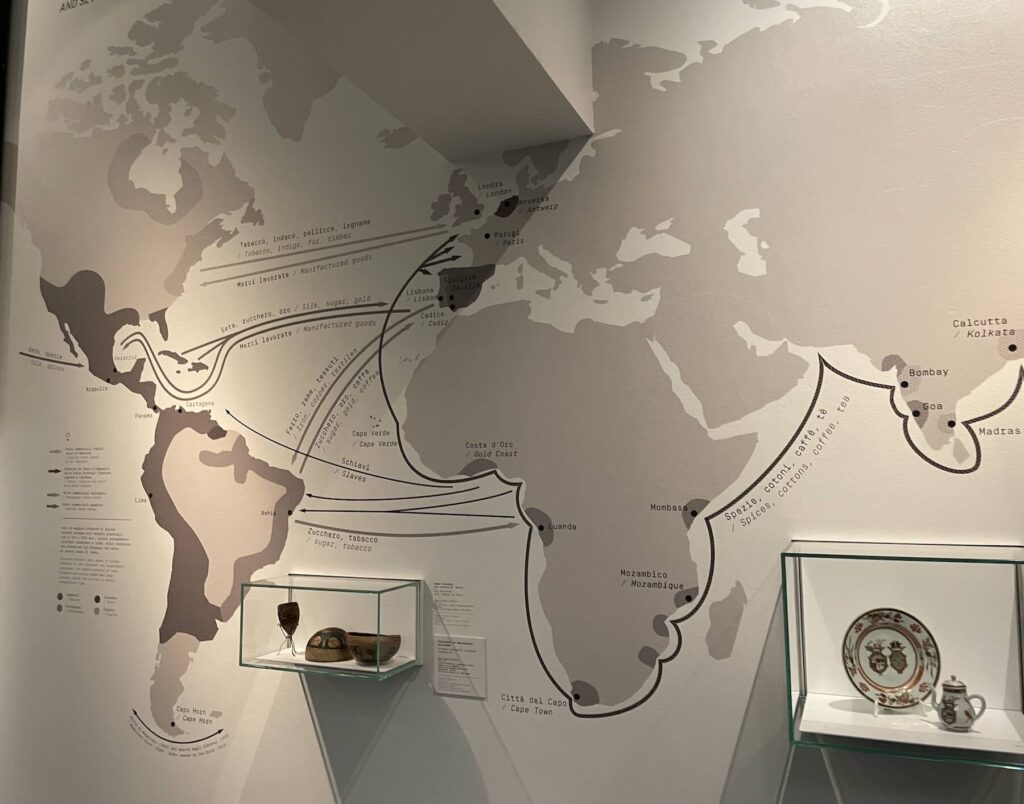
Rare and non-European objects started arriving in Milan, becoming part of encyclopedic collections like that of Manfredo Settala. Silver from the Potosí mines helped transform Milan into a center for minting coins and producing luxury goods — such as the famous Spanish “pieces of eight.” The exhibit also addresses the devastating consequences of this trade on Indigenous American populations and enslaved Africans.
From the Americas came cocoa and tobacco. From Asia came tea and coffee, alongside fine porcelain and luxury textiles that shaped European tastes. Chinese goods in particular played a key role in luxury commerce, sparking a European fascination with the East that led to the creation of chinoiserie — local adaptations of Asian design. The textile industry in Milan also embraced this global influence, both in importing materials and in producing locally inspired prints. The permanent exhibition includes several rooms, including the African section.
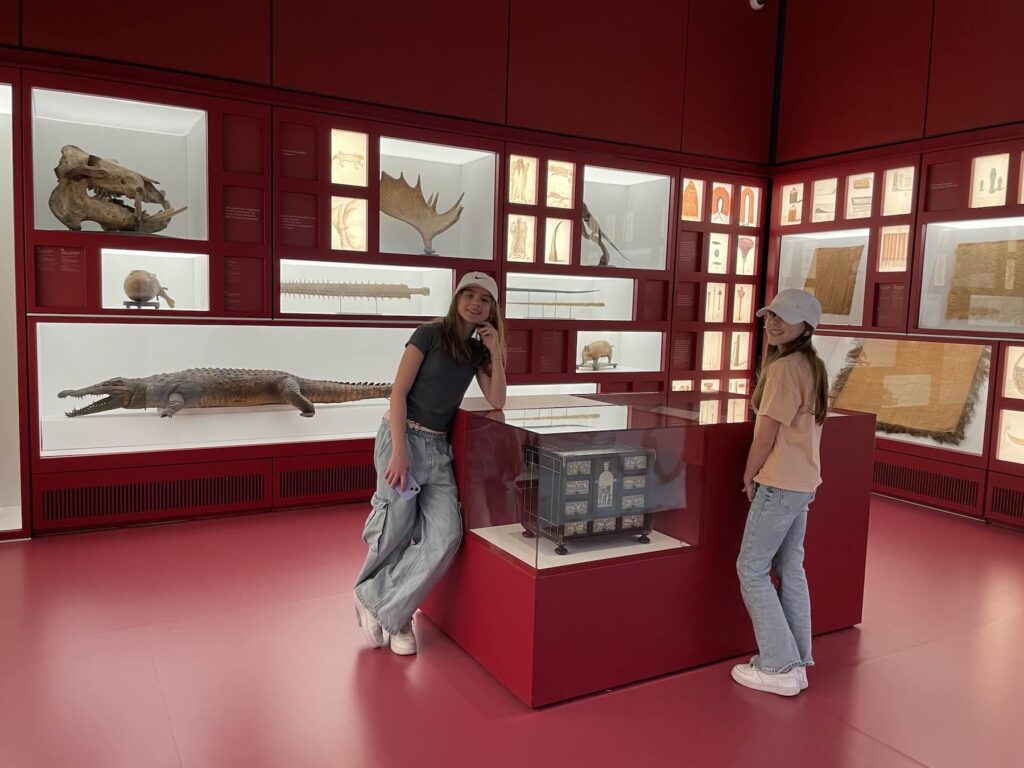
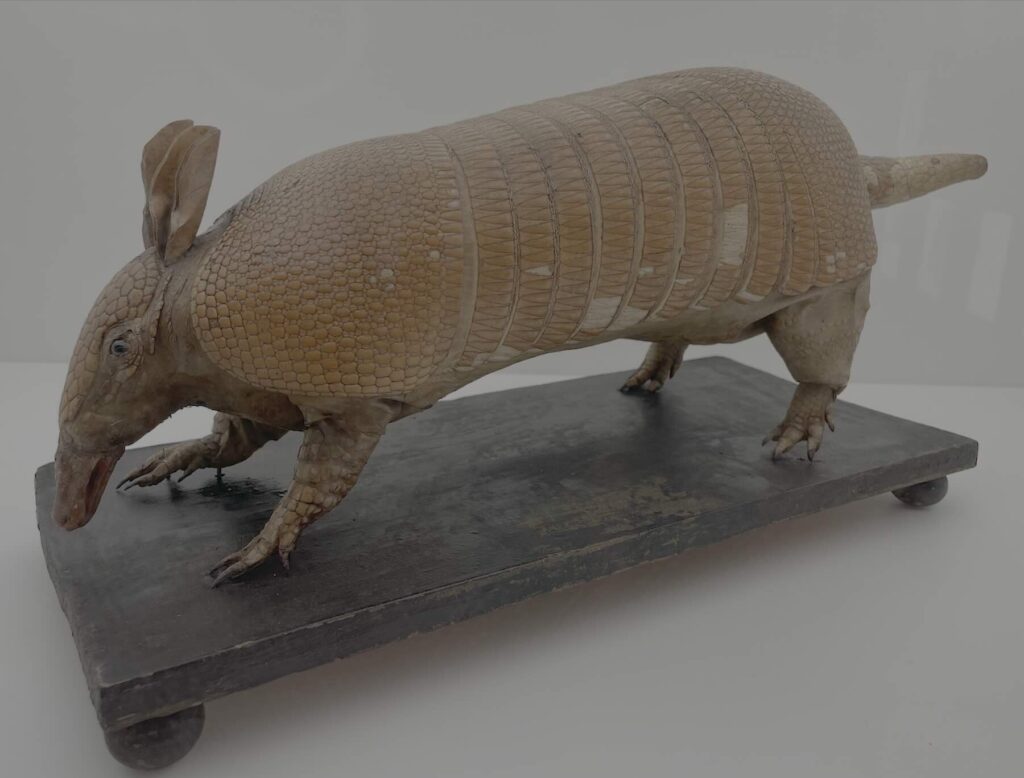
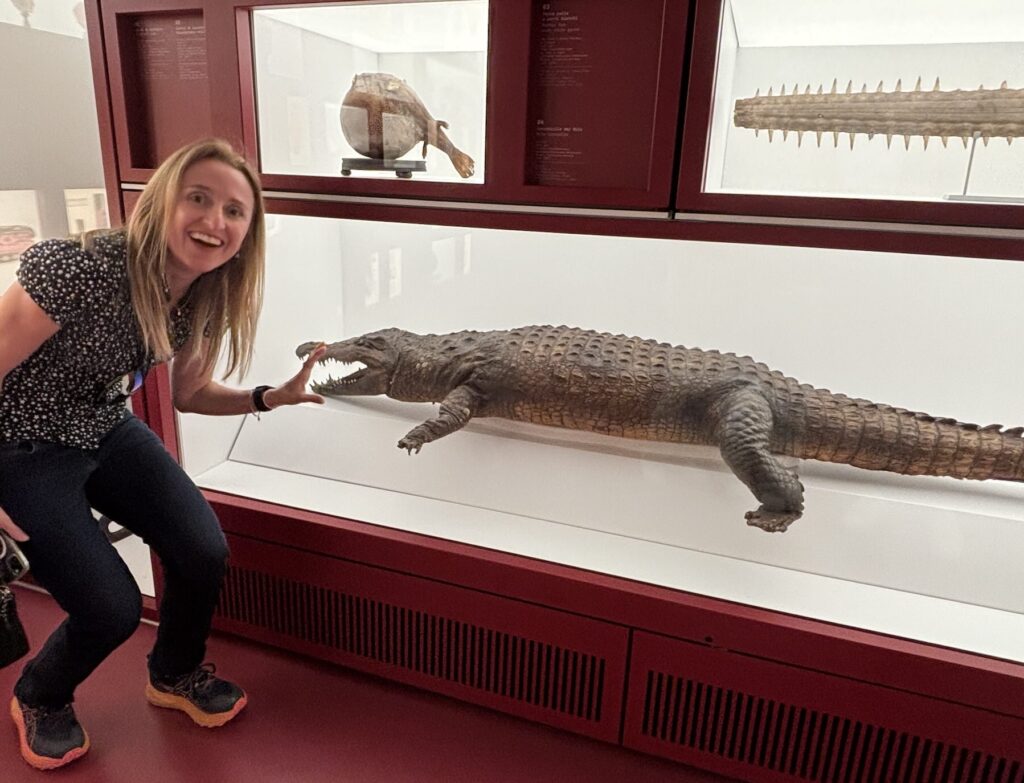
Among the highlights are a taxidermy armadillo from the 17th century, a large crocodile, and a ceremonial hammer from the Zo’ people of Pará, Brazil, dating to the mid-20th century.
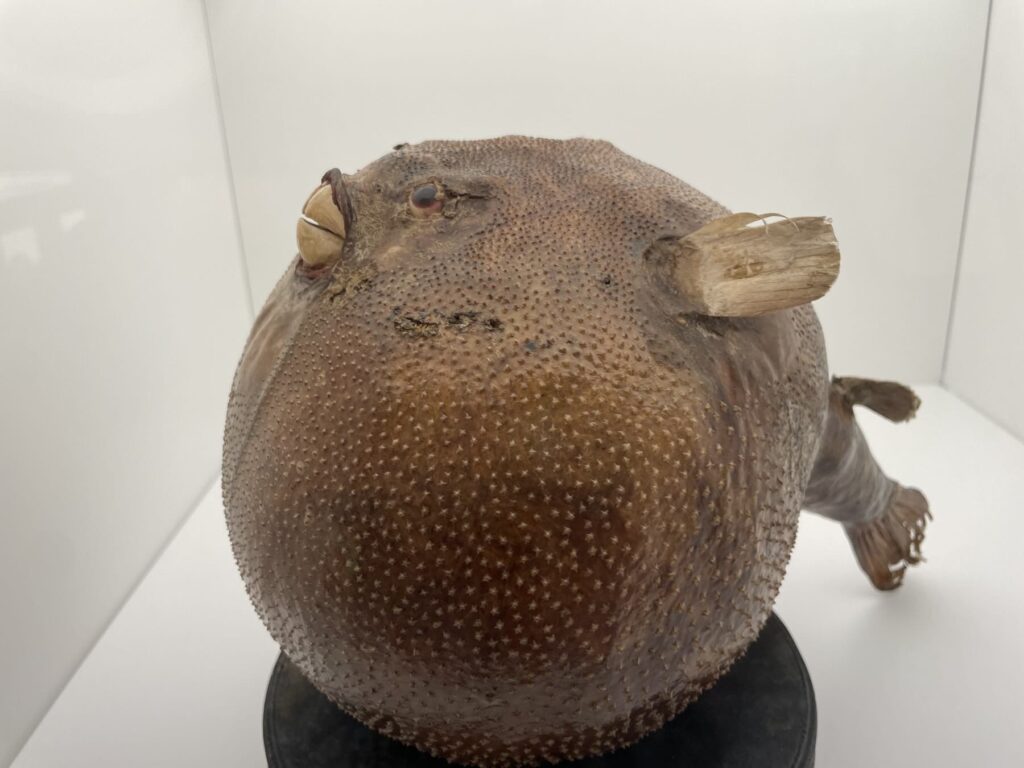
Another curiosity is a blowfish — once preserved as a prized item — originating from the Red Sea and the Pacific Ocean. It’s hard not to wonder whether someone once displayed these fascinating creatures in their own home before they arrived at the museum.
Temporary Exhibition: TRAVELOGUE – Stories of Journeys, Migrations, and Diasporas
Until September 21, 2025, visitors to Mudec can also see the temporary exhibition TRAVELOGUE – Storie di viaggi, migrazioni e diaspore, which is free to enter.
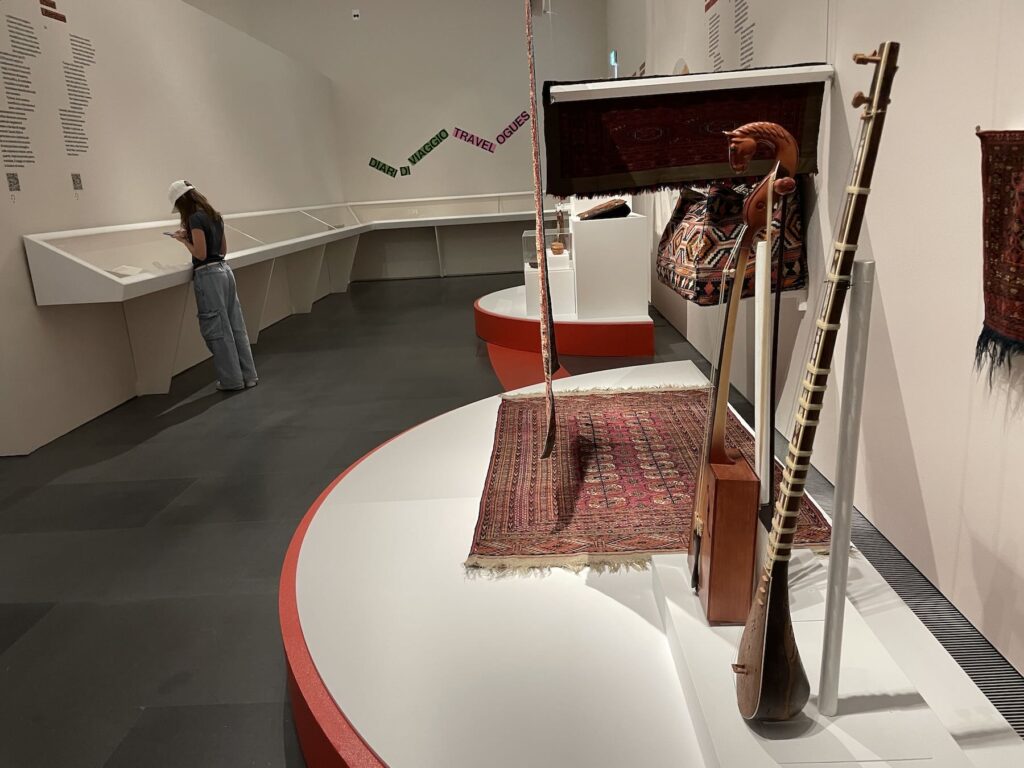
Curated by Katya Inozemtseva and Sara Rizzo, Travelogue explores the concept of travel as more than just movement from place to place. It draws inspiration from the very origins of Mudec’s own collections — shaped by Milanese explorers, scholars, travelers, and enthusiasts who used collecting as a way to preserve encounters, discoveries, and memories.
The exhibition opens with a section dedicated to mythical journeys, featuring figures like Charon and Dante, and gradually moves through themes such as nomadism, metaphorical travel, and finally, the tangible realities of tourism and migration. Visitors will find everything from miniatures and replicas to objects made for tourists or for everyday local use. There are also travel journals, sketchbooks, and photo albums — personal records that documented unique perspectives of the world between the late 19th and 20th centuries.
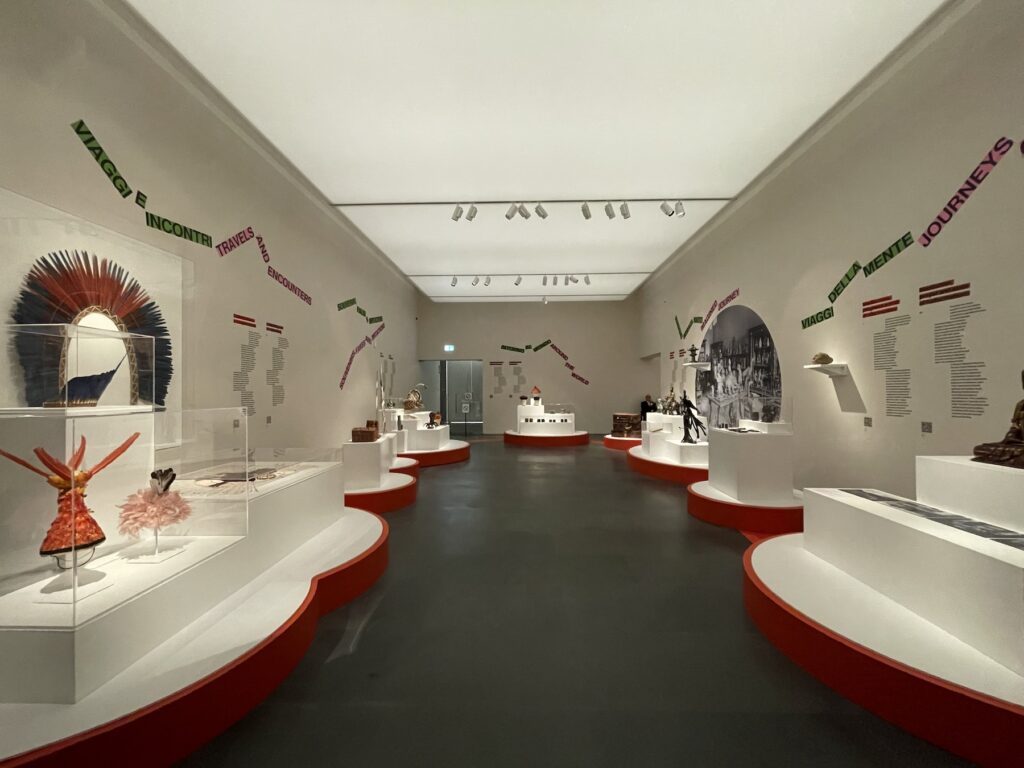
One of the most captivating objects is the laheto, a ceremonial feather headdress traditionally worn on the back of the head by young Indigenous Brazilians during puberty initiation rites, such as the Great House Festival. This powerful object symbolizes identity, belonging, and spirituality.
The laheto on display comes from Brazil and is part of the collection of Aldo Lo Curto, a physician who worked for many years in the country. His interest extended far beyond traditional medicine: “I wanted to understand the traditions of the people I met, and how they confront illness. In Western medicine, we focus too much on technology and not enough on human contact,” he once said.
This humanist perspective is reflected in the way the headdress is presented — not merely as an aesthetic artifact, but as a living testimony of ancient wisdom and vibrant cultural expression, still passed on through gestures, colors, rituals, and feathers.
To check all current exhibitions at Mudec, click here.
Michelin 3-Star Dining: Enrico Bartolini at Mudec
On the third floor of Mudec, you’ll find one of Milan’s most prestigious dining experiences: Enrico Bartolini, a restaurant awarded 3 Michelin stars.
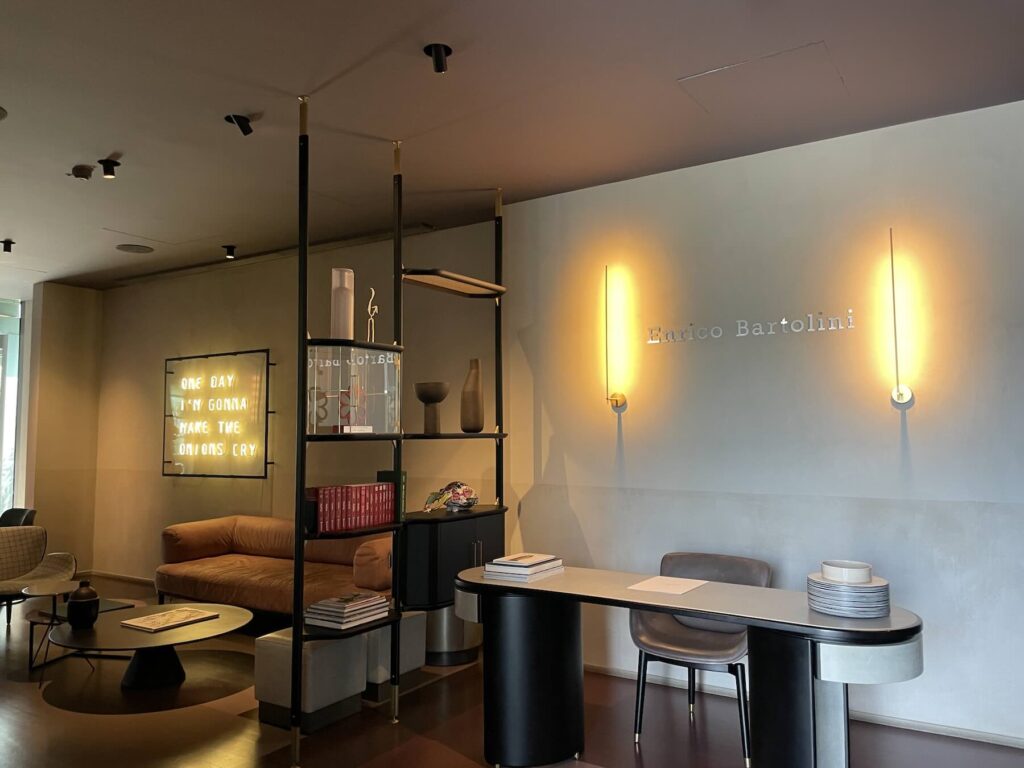
It’s the perfect spot for those looking to savor gourmet creations that double as works of art — or to impress a special someone. Just keep in mind: prices are high, with a full tasting experience easily running into several hundred euros per person.
The restaurant is generally open Tuesday through Saturday from 12:30 PM to 2:00 PM and from 7:30 PM to 10:00 PM. Reservations are strongly recommended and can be made by phone at +39 02 84 293 701 or via email at ristorante@enricobartolini.net.
Enjoyed the tip? When you book or buy through our links, you support Milan.Tips at no extra cost to you.
FIND YOUR NEXT STAY
Book your stay in Italy or anywhere in the world with our partner Booking.com!
You'll find the best deals and support our website. Thank you!
BOOK TRANSFERS AND TOURS ONLINE
Book transfers, tours, and excursions in Italy and around the world with our partner Get Your Guide.

[…] restaurants, including three three-star icons—Da Vittorio in Brusaporto, Enrico Bartolini al Mudec in Milan and Dal Pescatore in Runate—the region remains a reference point for high […]
[…] something less obvious, the Mudec – Museo delle Culture is a great option, combining exhibitions with contemporary architecture. The museum also hosts […]